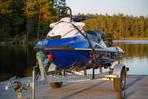
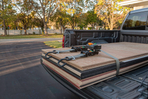
Rinse the webbing with clean, low-pressure water within 24 hours of the ride, keep the ratchet housing closed while the strap is still muddy, and let the strap air-dry in shade for 12–24 hours before retracting and storing it. Grit — not mud itself — is what kills a retractable ratchet strap, so the whole routine exists to keep abrasive particles out of the housing and out of the fibers.
Key Takeaways
- Grit, not mud, does the damage: it abrades a retractable ratchet strap's webbing fibers and pastes up its retraction spring.
- Extend the strap fully and rinse before you retract — retracting muddy webbing drags grit inside the housing.
- Air-dry 12–24 hours in shade; never store a damp strap rolled up inside the case.
- Replace, don't rescue, any strap with cuts, frays, or a glazed shiny surface.
- A yarn-dyed black-green strap rated at 500 lb WLL hides mud stains and never bleeds color onto plastics.
What Does Mud Actually Do Inside a Retractable Ratchet Strap?
Three failure paths threaten a muddy retractable ratchet strap, and all three are slow and preventable:
- Fiber abrasion. Dried mud on webbing works like sandpaper. Every cycle under tension drags grit across polyester fibers, and the surface eventually turns fuzzy and thin. A 1 in strap only delivers its full 500 lb WLL while its load-bearing yarns are intact.
- Housing paste. Wet grit retracted into the spring chamber dries into a crust. The coil then fights that crust on every wind-in, which shows up as slow retraction and a strap that never quite rolls all the way home.
- Pawl skip. A mud film on the ratchet gear teeth can stop the pawl from seating fully under load. A strap that looks clean but skips a tooth under tension is telling you the gear is contaminated — clean it before the next haul, not after.
How Do You Clean the Webbing Without Grinding Grit Into the Housing?
Five steps keep a retractable ratchet strap serviceable for seasons, in this order:
- Extend the strap fully. You cannot clean webbing that is still wound in the case, and retracting it muddy is exactly the mistake that packs grit inside.
- Rinse with a garden hose on low pressure. Both sides, top to bottom. High pressure drives water and grit past the housing seals, so keep the nozzle gentle and away from the case opening.
- Mild soap only if stains remain. A drop of dish soap and a soft brush, stroking along the strap length — never across it, never with bleach or solvents.
- Rinse again until the water runs clear. Soap residue attracts dirt, which defeats the whole exercise.
- Hang it up, case closed, out of the sun. Shade drying protects the fibers from the UV exposure that quietly shortens webbing life.
The whole routine costs ten minutes of actual work. The 24-hour window matters mostly for motivation: mud that dries overnight needs twice the scrubbing to remove.

How Should You Dry and Store Straps After a Rainy or Muddy Ride?
Air-dry the retractable ratchet straps in shade for 12–24 hours, then exercise the reel — extend and retract three or four times — to confirm the spring still winds smoothly before the strap goes back in the case. Store the set indoors: a garage shelf or a sealed bin beats a truck-bed toolbox, where heat, rain, and UV from an uncovered bed all take turns degrading the fibers. Winter riders should follow the salt and sand winterization routine, because road salt attacks a housing the same way trail mud does.
When Is a Strap Too Worn or Too Muddy to Trust?
Inspect before every load — the pre-trip walk-around that commercial drivers are required to do under 392.9(b) is a habit any consumer can copy in sixty seconds. Replace the strap if you find any of these:
| Symptom | What it means | Rinse or replace? |
|---|---|---|
| Cut or slice exposing core yarns | Load-bearing capacity is compromised | Replace |
| Fuzzy, thinning patches along the length | Abrasion from grit or an edge | Replace |
| Glazed, shiny, stiff section | Heat or chemical damage | Replace |
| Mud film on the surface only | Cosmetic, fibers intact | Rinse |
A strap that fails the table cannot be counted at its rated 500 lb WLL — and if you ever carry loads under the federal rules, regulators only credit the WLL printed on the assembly, verified against § 393.106(d). Worn gear never counts at full value, on paper or in physics.
Why Pick Yarn-Dyed Webbing for Dirt Bike Duty?
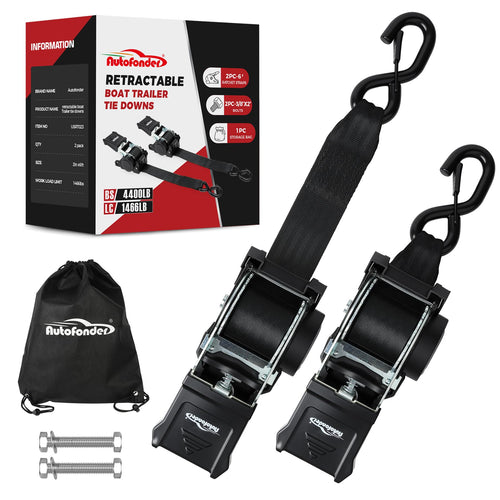
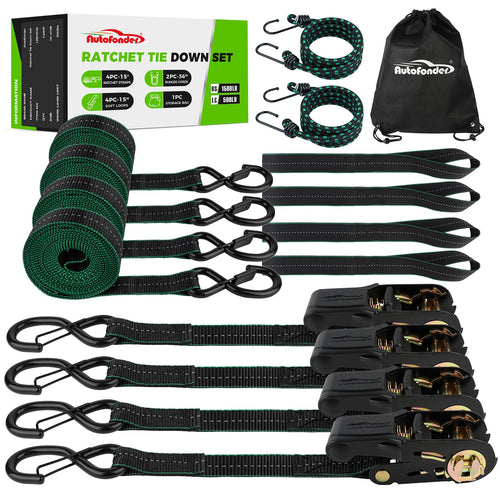
Autofonder yarn-dyed zero-color-transfer retractable ratchet straps (1,500 lb break strength, 500 lb WLL, $45.49) solve the two cosmetic problems mud riding creates. The pigment is locked into the yarn before weaving, so dye never migrates onto matte-black plastics, faded fenders, or trailer paint — the same mechanism we documented when we tested whether retractable straps stain painted surfaces. And the black-green weave masks trail stains between washes, so the set still looks like gear, not like a towel left out in the rain.
If your bike rides in a pickup bed or on a trailer with painted rails, pair the set with the safety-lock S-hook model, whose latching hooks stay put over washboard sections where a plain open hook can lift off its anchor.
When Do Standard Ratchet Straps Beat Retractables?
Retractables are the tidy choice, but three situations favor standard straps:
- Permanent wet-clay riding. If every weekend is a mud weekend, a standard strap with open hardware rinses clean in one pass and dries faster than anything with a sealed housing.
- Long or variable anchor runs. The self-storing case fixes your length; a 27 ft standard strap reaches whatever the trailer offers.
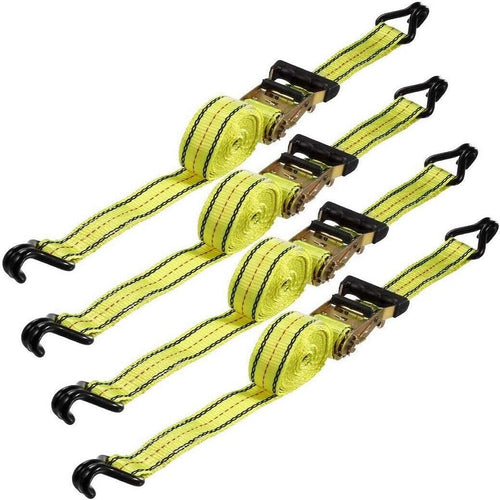
- Commercial flatbed securement. For-hire hauls require assembly-rated WLL verification under § 393.106(d) — use standard 2 in or 4 in ratchet straps or winch straps. Consumer retractables are personal-trailer gear.
For a deeper comparison on exactly this use case, see retractable vs standard ratchet straps for dirt bike transport. And if your strap ever does jam, the retraction troubleshooting guide covers the usual causes and fixes.
| What are you securing? | Width | WLL per strap | Best pick |
|---|---|---|---|
| One dirt bike, 200–250 lb | 1 in | 500 lb | Yarn-dyed 1 in retractable set |
| Two bikes plus gear, 500–700 lb total | 1 in (four straps) | 500 lb each | Yarn-dyed 1 in set, or 4-pack soft-loop set |
| Mixed loads: PWC, mower, UTV | 2 in | 1,466 lb | 2 in x 10 ft retractable pair |
| For-hire flatbed freight | 2–4 in standard | Assembly-rated | Standard ratchet or winch straps |
Bottom Line: Which Straps and What Routine?
Buy two Autofonder yarn-dyed retractable ratchet straps (1,500 lb break strength, 500 lb WLL, $45.49) — enough for one 200–250 lb dirt bike — rinse within 24 hours of every muddy ride, dry a full day in shade, and inspect the webbing before every load. Ten minutes of care per ride is what stands between a five-season strap and a one-season one. The full ratchet strap collection has the complete range if you need to mix widths.

Frequently Asked Questions
Can muddy ratchet straps snap in the middle of a trip?
A clean strap will not — a 1,500 lb break strength against a 500 lb WLL leaves a 3:1 design factor on a strap holding a 250 lb bike. The risk comes from grit damage that went uninspected: a fiber-abraded or cut webbing loses capacity silently. That is why the sixty-second pre-load inspection matters more than any washing step. If the strap passes the cut-and-fray check, road vibration will not finish it off.
Will the black-green yarn-dyed strap stain my dirt bike's plastics?
No — that is the entire point of yarn dyeing. The color lives inside the fiber before weaving, so there is no surface dye layer to rub off onto matte plastics, faded fenders, or painted trailer rails, wet or dry. Ordinary dyed webbing can crock — transfer color when wet and pressed hard — and that is exactly the failure mode the zero-color-transfer weave eliminates.
Can I use a pressure washer or degreaser on retractable ratchet straps?
Skip both. A pressure washer's narrow jet forces grit and water past the housing seals and can fray fiber edges, and petroleum degreasers soften polyester finishes. A garden hose on low pressure with mild dish soap cleans trail mud completely. If caked clay will not budge, soak the extended webbing for ten minutes first, then brush along the strap.
Why won't my strap retract after a muddy ride?
Almost always dried grit in the spring chamber. Extend the strap fully, rinse the webbing and the housing opening, let it dry, then exercise the reel gently several times. If it still winds slowly, the crust inside needs the full cleaning routine — or the spring has been fighting grit long enough to tire, which shows up as permanently sluggish retraction.
How often should I replace retractable ratchet straps that ride in mud?
There is no mileage interval — replacement is condition-based. Inspect the retractable ratchet straps before every ride and replace them at the first cut, fray, glazed patch, or broken stitching, regardless of age. A well-rinsed, shade-dried set that never fails inspection can last five seasons of weekend riding; an unwashed set stored wet can be done in one.