You keep retractable ratchet straps working through a salt-belt winter with one 10-minute routine after each trip on treated roads: rinse the housing and webbing in fresh water, cycle the ratchet until it runs dry, and store the unit unlocked. Salt that sits in polyester webbing for 48 hours is what stiffens it, not the cold.
Key takeaways
- Rinse within a day of any salted-road trip. Dried salt and grit inside the housing is the number one cause of slow retraction.
- Store retractable units unlocked and just snug. A spring left cranked tight for months loses tension.
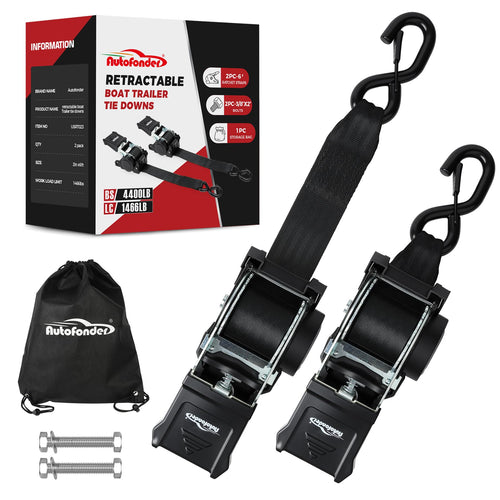
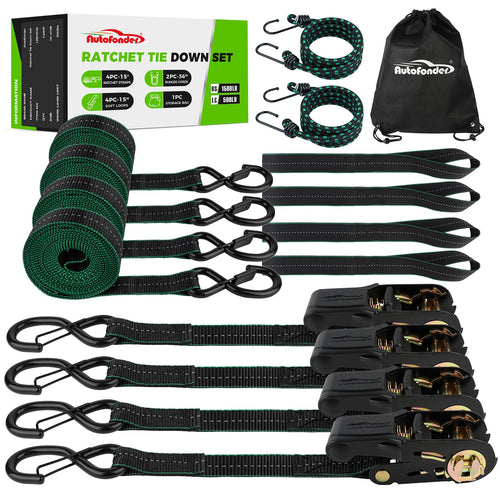
- A 1 in unit is rated 1,500 lb break strength and 500 lb WLL. A 2 in unit is 4,400 lb break strength and 1,466 lb WLL.
- Cut webbing, a rounded pawl tooth, or a drum that will not pull home means replace, not repair.
Why Do Retractable Ratchet Straps Seize Up After Winter Towing?
A retractable ratchet strap is a spring-loaded drum inside a sealed housing. The constant-force spring pulls the webbing home, and the pawl only bites when you tension a load. Road salt and sand enter through the same slot the webbing passes through, which is the one opening the design cannot close.
Once inside, the salt-and-grit slurry dries into a paste. It bridges the pawl teeth, packs against the drum flanges, and drags on the spring coils. It still clicks when you crank it, so nothing feels wrong until the morning it will not retract at all.
In practice the spring rarely breaks first; it loses a fight with a drum full of dried road salt. Cold makes the symptom worse without causing it: a wet strap left out at 20°F feels board-stiff by morning, but thaw it, rinse it, and it recovers. A strap that stays stiff after drying has salt in the weave.
What Does Road Salt Actually Do to the Webbing and the Housing?
On the webbing, dried crystals behave like fine sandpaper between the fibers. Every load cycle grinds them against the yarn until the surface goes fuzzy. That fuzz is abrasion, not dirt, and washing will not put the fiber back — which is why Autofonder tells owners to rinse rather than scrub.
Inside the housing, salt attacks the plated spring and the pawl pivot. Neither is stainless. Water sitting in the pivot for a week starts a rust bloom, and a rusted pawl that hangs open is how a load goes slack at highway speed.
The 3:1 design factor behind every working load limit assumes intact webbing. It says nothing about a mechanism that will not lock. A strap marked 500 lb WLL with a pawl that skips is worth zero, whatever the label claims.
How Do You Clean a Retractable Ratchet Strap Without Ruining the Spring?
Cleaning a retractable ratchet strap the right way takes five steps, no pressure washer, and no detergent.
- Extend the webbing fully and hold the ratchet open so the drum is exposed.
- Rinse with a garden hose at tap pressure — never a pressure washer, which drives water past the seals and shreds the weave.
- Work the pawl with your thumb while the water runs, so grit flushes out instead of settling behind it.
- Wipe the housing dry, then hang the webbing loose in shade until it is bone dry. Hours of direct sun are what make polyester brittle.
- Cycle the ratchet ten times once dry; if it pulls the webbing home smoothly, it is ready to store.
Skip dish soap and degreasers: they leave a tacky residue that collects dust on the next trip. Fresh water does the job.

A unit that has already stiffened usually frees up after a 10-minute fresh-water soak and the same cycle-and-dry routine. If it does not, the problem is mechanical, and cleaning will not fix a pawl that has lost its edge.
What Size Retractable Ratchet Strap Do You Need for Winter Hauling?
Winter loads are the same loads you haul in July, so size the strap to the cargo, not the season. This is the decision path Autofonder gives customers who call in November.
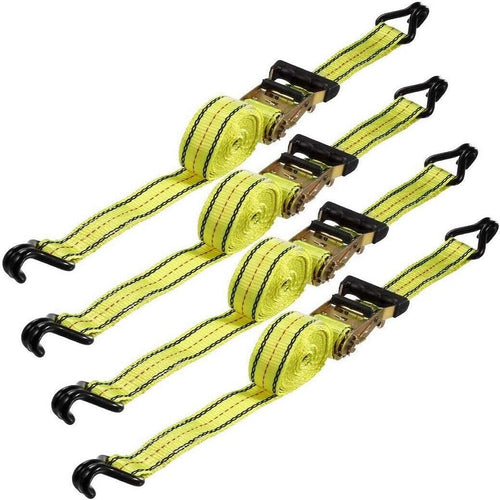
| The question you are asking | 1 in x 12 ft, 4-pack | 1 in x 15 ft NeatStrap | 2 in x 10 ft, 2-pack | 2 in x 6 ft, 2-pack |
|---|---|---|---|---|
| Break strength per strap | 1,500 lb | 1,500 lb | 4,400 lb | 4,400 lb |
| Working load limit per strap | 500 lb | 500 lb | 1,466 lb | 1,466 lb |
| Usable length | 12 ft | 15 ft | 10 ft | 6 ft |
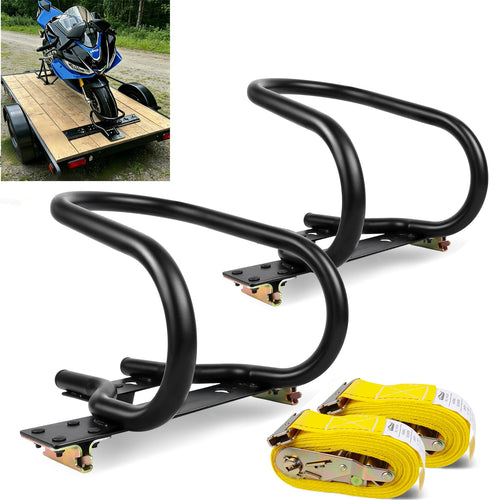
| Carrier it suits | ATV, mower, small implements, appliances | Motorcycle, kayak, cargo box | UTV, pickup bed, mid-size equipment | Boat transom to trailer tail |
| End fitting | Spring-latch S hook or soft loop | Chromoly S hook, or soft loop with safety lock | Spring-latch S hook | Spring-latch S hook |
| Price per set | $79.99 | $49.99 / $37.99 | $69.99 | $69.99 |
Twelve feet is the practical default: it covers an anchor-to-anchor run on most utility trailers with slack to spare. The 6 ft unit exists for one job — the short, straight pull from a boat transom to the trailer frame. Buying 15 ft just leaves coils hanging outside the housing, collecting road grit.

One number worth memorizing: 4,400 lb is break strength, not working load. At the standard 3:1 factor the rating is 1,466 lb per strap — the number a DOT inspector reads off the tag.
How Should You Store Them Between Winter Trips?
Hang them. A retractable ratchet strap stored cranked tight keeps its constant-force spring stretched for months, and a spring left at full extension loses tension. Release the load, let the webbing retract until just snug, and hang the housing on a hook in a dry garage.
If the trailer lives outside, take the units off for the season. A housing that fills with snowmelt and refreezes can crack along the seam, and ice damage is not a warranty claim.
When Should You Not Use a Retractable Ratchet Strap?
These are consumer and light-commercial tools with jobs they should not touch.
- Loads above the per-strap rating. A 1 in unit is a 500 lb WLL strap. A second strap does not double capacity, because the drum, the hook and the anchor become the bottleneck.
- Runs longer than the fixed webbing length. You cannot add a leader to a retractable strap. If the pull is 14 ft, a 12 ft unit will not reach, and a knot mid-run is not a repair.
- Commercial flatbed work. On a DOT-regulated flatbed you must verify the assembly's marked WLL against the aggregate requirement in 49 CFR 393.106(d), and standard 2 in or 4 in ratchet straps or winch straps are the right hardware for that duty.
- Abrasive cargo. Sand, gravel and rusted steel eat a retractable housing. Use a standard strap you can inspect end to end.
If your strap retracts but will not stay tight, that is a different failure — see our guide to why retractable ratchet straps stop retracting on a UTV. For the short transom pull on a boat trailer, see which retractable tie down straps fit a boat trailer transom.
FAQ
Do retractable ratchet straps rust if they get rained on?
Rain alone will not ruin one. The housing sheds most of it and polyester webbing does not rot. Damage comes from water that stays inside, such as a unit left lying in a wet trailer bed for a week. Rinse with fresh water, dry it open, and a rain-soaked strap is fine.
Can I leave retractable ratchet straps on the trailer all winter?
Leave the bracket, take the unit indoors. Snowmelt refreezing inside the housing cracks the shell, and salt spray off the tires packs the pawl solid. If it has to stay outside, at least release the tension and tape the housing opening shut.
Will a retractable ratchet strap hold at highway speed?
A strap rated 500 lb WLL holds any load inside its rating at 70 mph, provided the pawl is fully seated and the webbing is not rubbing a sharp edge. The real failure at speed is a pawl that never engaged — pull hard on the webbing after tensioning, and reseat the drum if it gives.
How long do they last in salt-belt use?
Three to five seasons is realistic for a unit rinsed after every winter trip and stored indoors. The same unit left bolted to the trailer year-round often fails in two. The spring is usually still serviceable when the pawl pivot seizes.
Should I oil the ratchet mechanism?
A dry lubricant applied twice a season is plenty. Spray it into the pawl pivot, work the handle, and wipe off the excess. Wet oil traps sand and turns the housing into a grinding paste, and never spray lubricant on the webbing itself — it attracts grit and can mark cargo.
Bottom line
For winter hauling with a UTV or a loaded pickup bed, buy the Autofonder 2 in x 10 ft retractable ratchet straps — 4,400 lb break strength, 1,466 lb WLL per strap, $69.99 for the pair — and rinse them after every trip on salted roads. For ATVs, mowers and appliances, the 1 in x 12 ft four-pack at 500 lb WLL per strap ($79.99) is the right call. Hang either set in the garage instead of leaving it bolted to the trailer — the full ratchet strap collection covers other lengths. For truck bed loads, see our pickup bed safety guide.