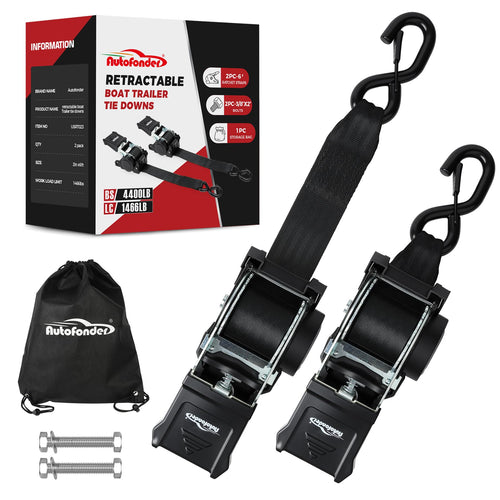
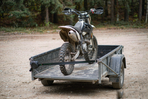
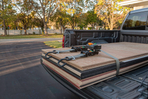
Two retractable ratchet straps are the minimum for any ATV, and four anchor points is the standard setup for highway trips. A pair of 2-inch x 10-foot retractable straps rated at 1,466 lb working load limit per strap tensions one side of the machine in about 60 seconds — already mounted, already sized, and never tangled in the truck bed.
Key Takeaways
- Two 2-inch retractable straps minimum; four anchor points for sustained highway speeds.
- 1,466 lb WLL per strap (4,400 lb break strength) covers any production ATV, most of which weigh 350 to 850 pounds.
- Hook the S hooks to the steel rack or frame — never to plastic fenders or A-arm plastics.
- 1-inch x 12-foot straps (500 lb WLL) are enough for light sport quads on short hauls.
- Re-crank anything that has relaxed at your first fuel stop — the same first-50-mile habit commercial drivers follow under 49 CFR 392.9(b).
How Many Retractable Ratchet Straps Does an ATV Actually Need?
Two — one per side — will legally and physically hold any ATV on a utility trailer. Most full-size ATVs weigh between 350 and 850 pounds, and the working benchmark is that the combined working load limit of your tie downs should reach at least half the machine's weight. That 50% figure comes straight from the federal commercial rule, 49 CFR 393.106(d), and it is the right mental math even for weekend hauling.
Counted the way the regulation counts — half the marked WLL for each strap that runs from a trailer anchor point to the machine — a pair of 1,466 lb WLL retractable ratchet straps still delivers 1,466 lb of aggregate working load limit. That is more than three times the half-weight requirement for an 800-pound quad.
Four anchor points is still the better answer for anything faster than a slow backroad. Front and rear, one strap per corner, stops the two movements a two-strap rig allows: the front end hopping under hard braking and the rear walking side to side in a corner. The rear rack grab bar plus the front rack or A-arm mounts give you four clean steel pull points on almost every utility quad.
Where Should You Anchor the Straps on an ATV?
Pull from steel, in a straight line, and as low as the frame allows. The strongest points are the front rack tubes, the rear grab bar, and the frame loops near the footpegs. A strap hooked to a plastic fender or a thin plastic brush-guard panel will chew the plastic long before it stops the machine.
Angle matters less than people think, but the line should never cross a sharp aluminum edge or a hot exhaust without protection. A cheap cloth guard or a scrap of fire hose at any contact point protects both the webbing and the finish — the same edge-protection principle commercial securement rules require at 49 CFR 393.104.
What Size Retractable Ratchet Strap Fits an ATV?
Match the strap to the weight and the anchor run, not to the biggest number on the shelf:
| Question | 2in x 10ft 2-pack | 1in x 12ft soft loops, 4-pack | 1in x 12ft 4-pack |
|---|---|---|---|
| Break strength per strap? | 4,400 lb | 1,500 lb | 1,500 lb |
| Working load limit per strap? | 1,466 lb | 500 lb | 500 lb |
| How long is your anchor run? | Mid-length runs, truck beds | Long runs around big racks | Long runs, multiple cargo |
| Best carrier and load? | Full-size ATVs, UTVs, truck beds | Light sport quads, mowers | ATVs plus gear, multi-item loads |
| Price? | $69.99 (2-pack) | $79.99 (4-pack) | $79.99 (4-pack) |
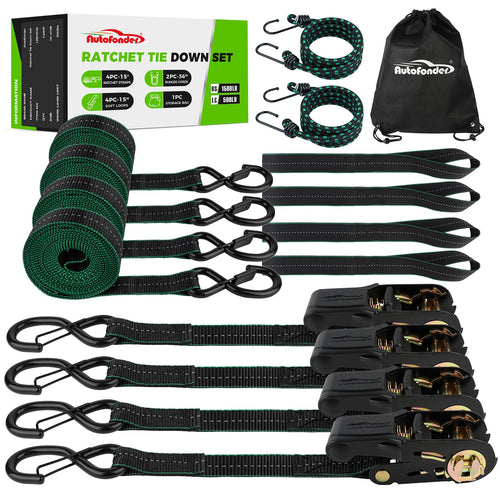
The Autofonder 2" x 10' retractable ratchet tie down straps are the right call for full-size quads: 2-inch webbing stretches less under highway vibration, and the latching S hooks clip straight into rack tubes or frame holes. If you also haul a lawn tractor or a kayak on the same trailer, the 1" x 12' soft-loop retractable straps wrap around bars and rails without scratching paint — the same reason they are the go-to for kayak tie downs.

How Do You Rig Retractable Ratchet Straps on an ATV Step by Step?
- Park on level ground, chock the trailer wheels, and roll the ATV forward until the strap runs will be straight and short.
- Pull the webbing out of the housing and clip the S hook to a front anchor point; repeat on the other side.
- Crank the ratchet handle until the strap is snug, then add two to three more strokes. The suspension should compress slightly — that is what kills bounce.
- Repeat with the rear straps to the grab bar or frame loops.
- Grab the rack and shake the machine hard. ATV and trailer should move as one, with no visible strap stretch and no rattle in the housing.
- Drive five minutes, stop, and re-crank anything that has relaxed. Suspension settle steals tension in the first miles, which is why commercial drivers re-inspect within the first 50 miles under 49 CFR 392.9(b).

Safety note: the internal spring rewinds the webbing fast once you release the ratchet lock. Keep fingers clear of the housing mouth whenever the strap is under tension.
When Should You Not Use a Retractable Ratchet Strap on an ATV?
Honest limits, because a retractable is not always the right tool. The usable length is fixed — if your anchor points are unusually far apart, a 10-foot strap may simply not reach, and you cannot splice or lengthen the webbing. Sand and grit that get sucked into the housing can make the rewind sticky over time, and the same-size retractable design generally carries a lower WLL than an open standard ratchet strap because the mechanism lives inside the case.
Retractable ratchet straps are consumer and light-commercial gear. If you haul ATVs commercially on a flatbed, verify your securement against the aggregate WLL required by 393.106(d) using the WLL marked on each assembly — and for regular commercial flatbed work, standard 2-inch or 4-inch ratchet straps or winch straps remain the appropriate choice. For daily recreational hauling, the convenience wins: no loose strap tails flapping, no pile of webbing to coil, and tension you can re-set in one click at any stop.
Bottom Line
For a 350 to 850 lb ATV, buy the Autofonder 2" x 10' retractable ratchet strap 2-pack at $69.99 (1,466 lb WLL per strap), rig four anchor points at the rack tubes and grab bar, and re-crank at your first fuel stop. If you also have a UTV side-by-side, a dirt bike, or folded trailer ramps to secure, the same 2-inch pair plus a 1-inch 4-pack covers the whole trailer — see how we rig folding trailer ramps with retractable straps.