A 2-inch ratchet strap is rated 3,333 lb WLL with a 10,000 lb break strength; a typical 2-inch cam buckle strap tops out near 666 lb WLL. Choose a cam buckle for hand-tight, damage-free tension on light loads, and a ratchet strap whenever DOT rules require tiedowns to total half the cargo weight.
Key takeaways
- A cam buckle strap grips webbing with a spring-loaded cam; tension is limited to hand strength, so it cannot crush fragile cargo.
- A ratchet strap multiplies your pull through a gear-and-pawl handle, reaching several times more holding force.
- Under WSTDA T-1, WLL equals break strength divided by 3 — that is why a 1,200 lb cam buckle is a 400 lb strap.
- FMCSA 49 CFR 393.106(d) requires aggregate WLL of at least one-half the cargo weight on commercial vehicles.
- Cam buckle straps slip when webbing is dirty, wet, or twisted; ratchets hold tension but can over-compress delicate loads.
What Is the Difference Between a Ratchet Strap and a Cam Buckle Strap?
The difference is the tensioning mechanism. A cam buckle strap uses a spring-loaded cam plate with teeth that bite into the webbing when you pull the tail by hand. Release the pull, and the cam locks. All the tension comes from your grip — usually 100 to 200 lb of force at most.
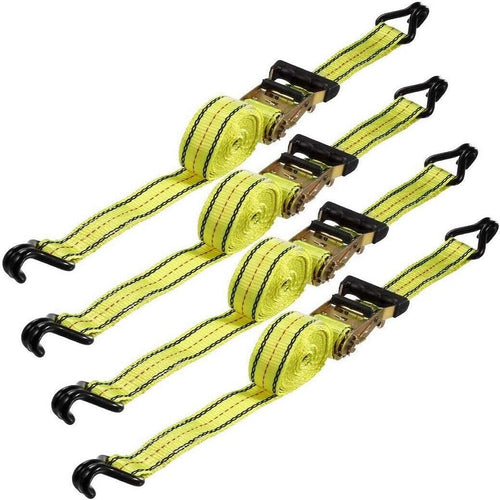
A ratchet strap threads the webbing through a spool inside a geared handle. Each pump of the handle winds the strap tighter and multiplies your input force, producing several hundred to more than a thousand pounds of pre-tension. That mechanical advantage is why a 2-inch Autofonder flat hook ratchet strap reaches a 3,333 lb WLL while a 2-inch cam buckle assembly generally sits near 666 lb WLL — the same webbing, a very different tensioner.
Because the ratchet multiplies force, it can also over-tighten. On fiberglass kayak hulls, antique furniture, or soft-goods bundles, that is a downside. The cam buckle's hand-tight ceiling is a feature there, not a flaw.
How Much Weight Can Each Strap Hold?
Ratings depend on the assembly, not just the webbing. Under the WSTDA T-1 recommended standard, working load limit is one-third of the assembly's minimum break strength, and 49 CFR 393.108 counts the lowest-rated component — webbing, buckle, ratchet, or hook — as the assembly rating. (We break down the full capacity math in how much weight a 2-inch ratchet strap holds.)
| Strap type | Typical break strength | Typical WLL | Tension method | Best suited for |
|---|---|---|---|---|
| 1" cam buckle strap | ~1,200 lb | ~400 lb | Hand-tight | Kayaks, coolers, luggage, ladders |
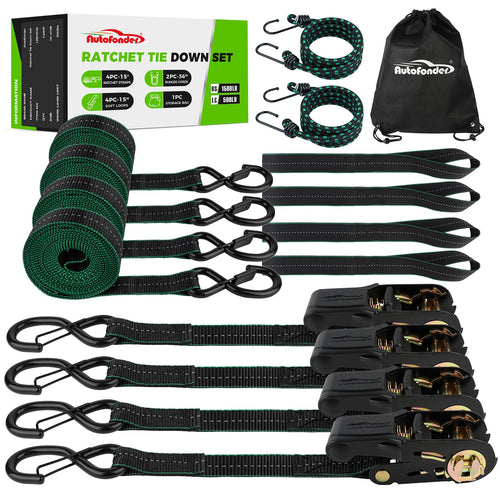
| 1" ratchet strap | 1,500 lb | 500 lb | Ratchet handle | Dirt bikes, ATVs, gear bundles |
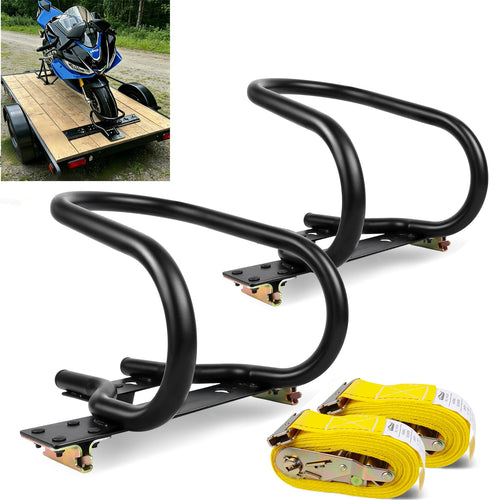
| 2" cam buckle strap | ~2,000 lb | ~666 lb | Hand-tight | Soft-tie motorcycle transport |
| 2" ratchet strap | 10,000 lb | 3,333 lb | Ratchet handle | Cars, pallets, equipment, lumber |
Read the label, not the width. Two 2-inch straps can carry different ratings because end fittings and buckles differ — the hardware, not the webbing, often sets the number. Every strap you buy for highway use should have a sewn-in tag listing WLL and break strength; if the tag is missing or illegible, retire the strap.

When Is a Cam Buckle Strap the Better Choice?
Choose a cam buckle strap when the load is light, fragile, or easily crushed, and when speed matters more than force:
- Kayaks, canoes, and paddleboards on roof racks, where 1.5-inch webbing spreads pressure across a soft hull
- Cooler lids, tackle boxes, and camping totes that a ratchet would dent or warp
- Ladder and pipe bundles where you re-tension often and want a 5-second release
- Inside enclosed trailers or truck beds, where cargo is blocked by walls and the strap mainly prevents rattle
A useful benchmark: if the cargo weighs under 500 lb and sits against a bulkhead or inside a walled bed, a quality 1-inch cam buckle rated at 400 lb WLL gives you a workable margin. If the load can shift, tip, or slide forward under braking, the cam buckle is the wrong tool.
When Do You Need a Ratchet Strap Instead?
Switch to ratchet straps whenever the load is heavy, unblocked, or governed by FMCSA rules. The arithmetic is unforgiving. Under 49 CFR 393.106(d), the aggregate working load limit of your tiedowns must be at least one-half the weight of the cargo, and a tiedown that runs from an anchor on the vehicle, over the cargo, back to an anchor on the same side only counts half its WLL.
Work an example: a 900 lb ATV needs at least 450 lb of aggregate WLL. Four cam buckle straps at 400 lb WLL would meet it on paper, but under 393.110 an unblocked article over 5 ft long or over 1,100 lb needs at least two tiedowns regardless — and inspectors treat cam buckles poorly when they are the only thing between a machine and the road. Four 1-inch ratchet straps give you 2,000 lb of aggregate capacity with margin for the 0.8 g forward deceleration force the rules assume in 393.102.

Can You Use Cam Buckle Straps for DOT-Regulated Loads?
Sometimes, but only where the numbers work and the label backs them up. The federal rules do not ban cam buckles by name; they require tiedowns to be "marked by the manufacturer with the working load limit" if you want to count the marked value under 393.108(b). An unmarked strap is scored at the default table values for its material, which are lower.
In practice, that means:
- Commercial flatbed loads: ratchet straps, essentially always — the aggregate WLL math and CVSA inspection practice leave no room for friction-only hardware.
- Blocked, light cargo inside a van or enclosed trailer: a labeled cam buckle strap can legally serve as part of the securement system.
- Any load where a CVSA inspector could call it "inadequate securement": upgrade to a ratchet. A failed roadside inspection costs far more than a set of 2" x 27' flat hook ratchet straps.
How Do You Keep Cam Buckle Straps From Slipping?
Cam buckle straps rely on friction, so anything that lubricates the webbing defeats them. Dirt, oil, rain, and ice all reduce grip. Thread the tail so the load-side webbing enters under the cam teeth, pull the slack tight by hand before the cam bites, and keep the webbing flat — a twisted strap cannot be gripped evenly.
Re-check tension after the first few miles. Webbing stretches and settles, and a strap that was tight in the driveway is often slack by the highway. On long trips, stop and re-tension at the intervals commercial drivers use — at 50 miles, then every 3 hours or 150 miles. If the cam teeth show wear or the spring weakens, the strap is done: knots are prohibited on tiedowns under 393.104(f)(1), so you cannot tie off a slipping tail.
Bottom Line: Which Strap Should You Buy?
Buy cam buckle straps for hand-tight, no-crush duty under roughly 500 lb, and buy ratchet straps for everything that rolls, shifts, or has to satisfy the one-half-weight rule of 393.106(d). For most pickup and trailer owners, one set of each covers it: a 1" x 15' ratchet strap 4-pack (1,500 lb break / 500 lb WLL) for powersports and gear, and a 1.5" x 15' double J-hook set (3,000 lb break / 1,000 lb WLL) when you need more muscle without going to 2-inch hardware. Browse the full ratchet strap collection and add tie-down accessories like soft loops to protect painted surfaces.
FAQ
How much weight can a 1-inch cam buckle strap hold?
A typical 1-inch cam buckle strap breaks at about 1,200 lb and is rated around 400 lb WLL under the WSTDA 3:1 safety factor. Treat 400 lb as the ceiling for securing cargo, not 1,200 lb. The cam mechanism, not the webbing, usually sets that limit because tension never exceeds hand strength.
Are cam buckle straps DOT approved?
There is no "DOT approval" for straps — there is compliance with 49 CFR 393.104 through 393.108. A cam buckle strap with a sewn-in WLL tag can be counted toward the aggregate working load limit if the math in 393.106(d) works out. For most commercial loads, ratchet straps are the practical choice.
Can a cam buckle strap hold a motorcycle?
For transport inside an enclosed trailer with the bike blocked, a 2-inch cam buckle strap rated near 666 lb WLL is commonly used for soft-tie points. On an open trailer, use ratchet straps: an unblocked article needs two tiedowns minimum under 393.110, and vibration loosens cam buckles over long distances.
Why does my cam buckle strap keep loosening?
Three usual causes: wet or dirty webbing reducing cam friction, a twisted strap that cannot seat evenly, and webbing stretch during the first miles of travel. Clean and dry the webbing, thread it flat under the cam teeth, pre-tension by hand firmly, and re-check after 50 miles or 3 hours of driving.
Do cam buckle straps stretch the webbing faster than ratchets?
No — webbing stretch depends on material, not the buckle. Low-stretch polyester is standard for both styles. The difference is pre-tension: a ratchet stores far more tension in the same webbing, which is why ratcheted loads stay put longer but also why ratchets can over-compress fragile cargo that a cam buckle would simply snug down.